
From shared recommendations to a guided optimizer.
60-second summary
- Who:
- Paying daily fantasy players on web and mobile.
- Key decision:
- From identical shared lineups to a guided optimizer, where the software proposed a core and each customer chose the rest.
- Results:
- 2,300+ paying customers; $500K raised; first company selected for the Philadelphia 76ers Innovation Lab.
- My role:
- Founder; led a six-person engineering, data science and design team.
Built and sold lineup-optimization tools for daily fantasy sports players on web and mobile. I owned product strategy and development, raised $500K, and managed a six-person team across engineering, data science and design.
Raised $500K. First company selected for the Philadelphia 76ers Innovation Lab.
Keep a recommended core and let customers decide
Shared lineup recommendations saved customers research and gave them a simple finished answer. But customers entering identical lineups split winnings. Distributing the same lineup to everyone limited how customers could use our sports analytics to make their own decisions.
I led the shift to a guided optimizer: keep a recommended core while customers choose the remaining players within salary and roster constraints. Early mockup reviews made the direction specific: start with three recommendations and offer a way to replace a player they did not want. The product would guide a choice without making every choice for the customer. Selections could still overlap.
From recommendations to a completed lineup
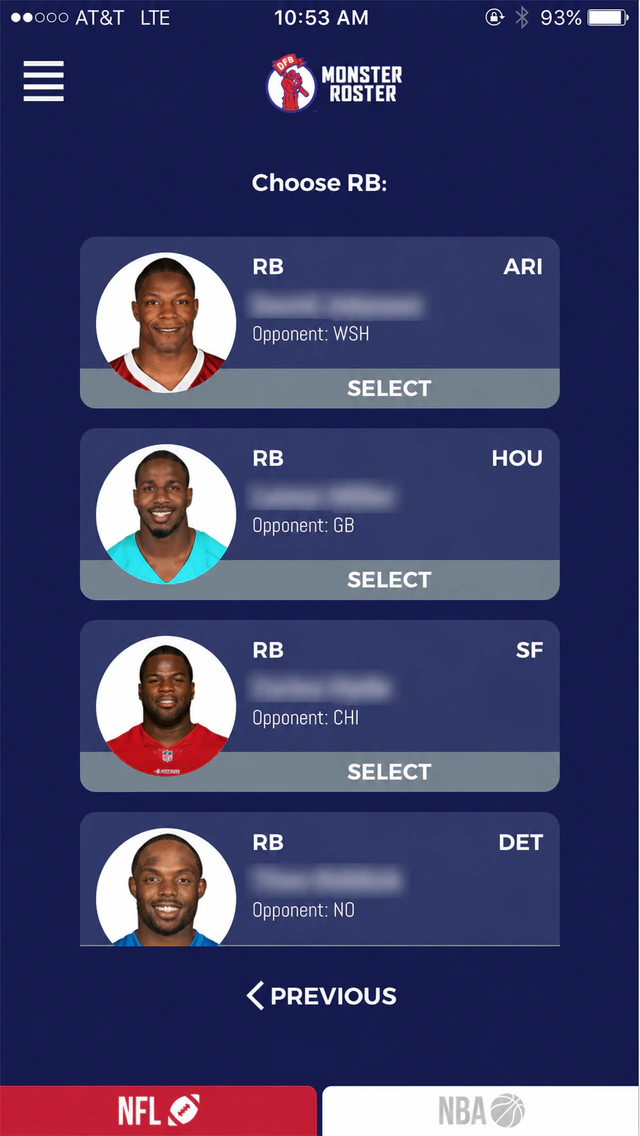
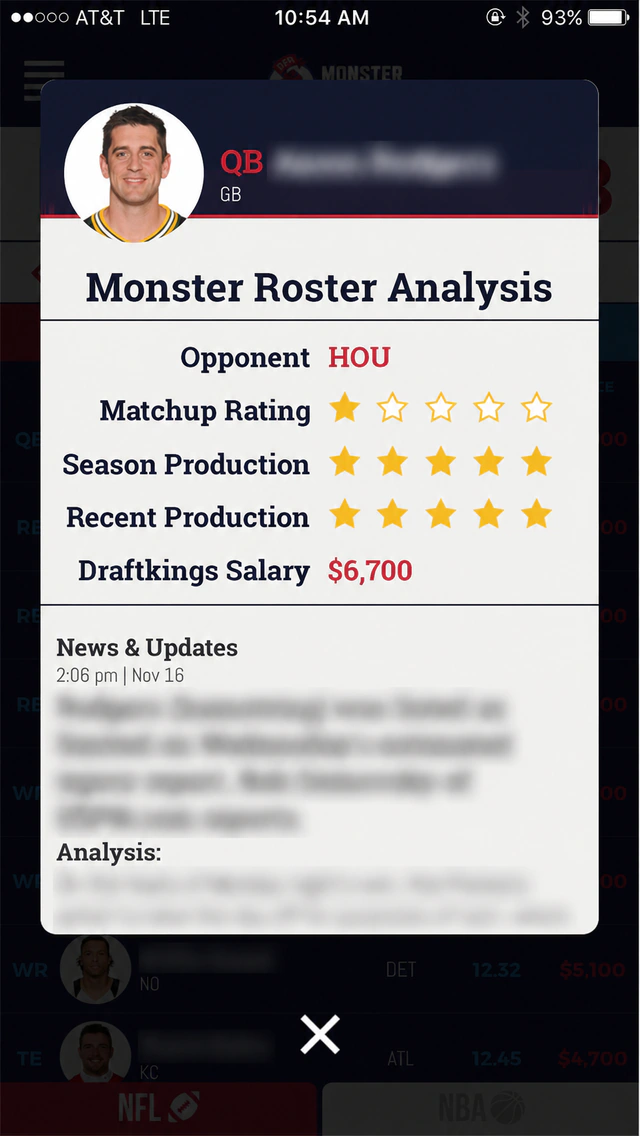
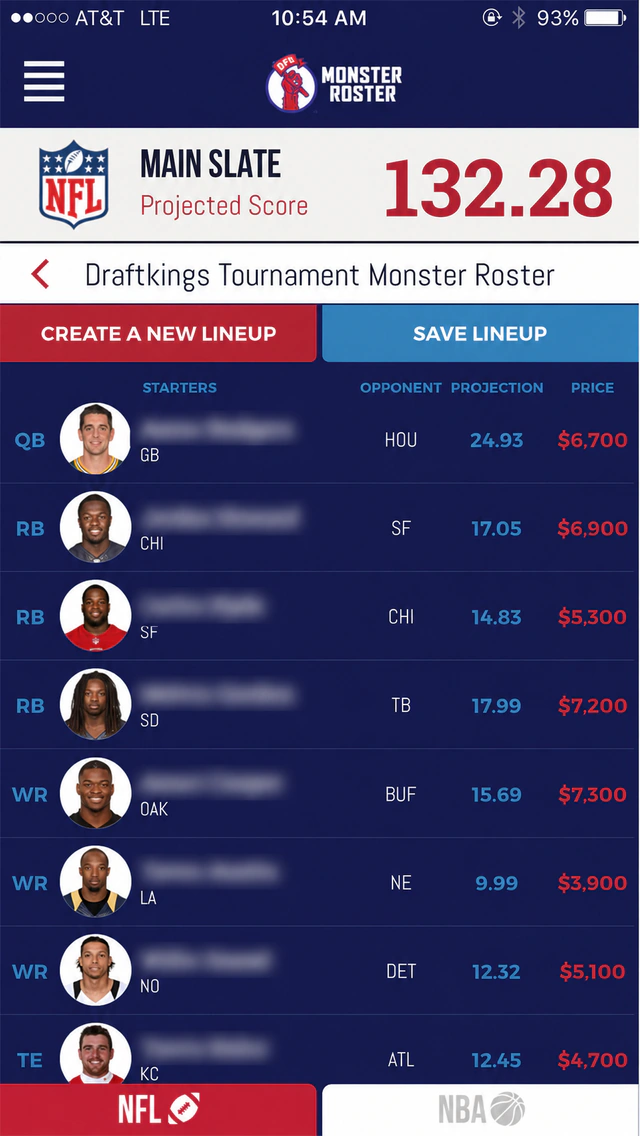
The football screens show the flow from three locked recommendations to running-back choices, player analysis and a completed lineup. Matchup ratings, salary and news gave customers context for their choices. The lineup review brought the roster, projections and salaries together, with controls to save it or create another lineup.
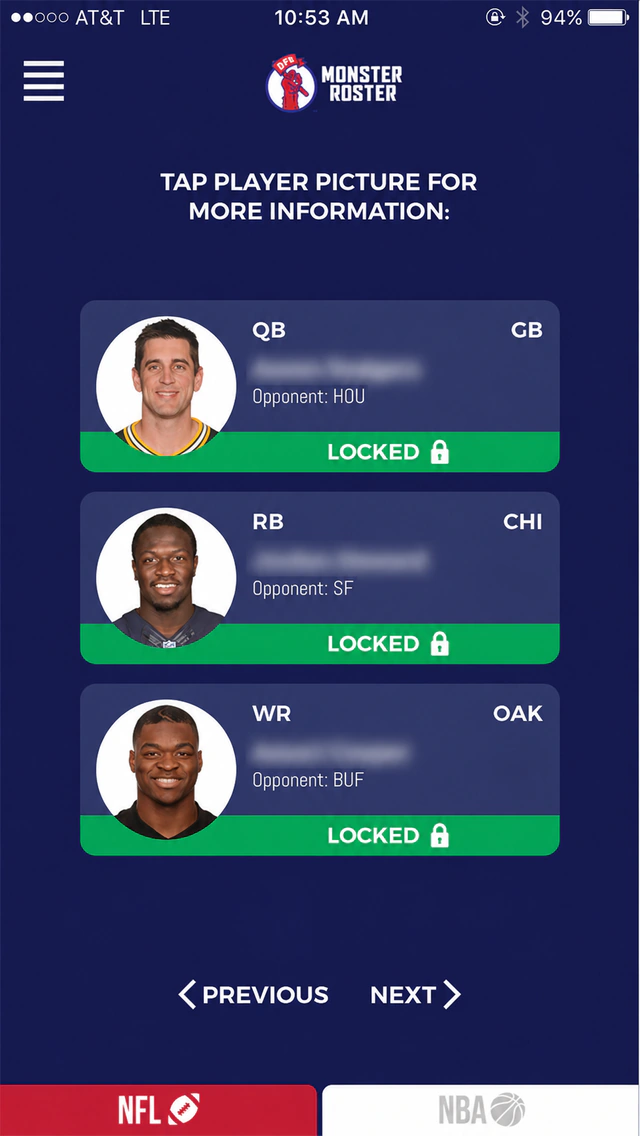
- Recommended coreThree recommended players are marked Locked. Customers can inspect a player or continue to the next choice.View full size
- Player choicesThe running-back choices show players, teams and opponents beside Select controls.View full size
- Player analysisA player detail brings matchup and production ratings, salary and news together before a choice.View full size
- Lineup reviewThe lineup review combines player projections and salaries with a 132.28 projected score and Save lineup control.View full size
Make the experience specific enough to build
I wrote product requirements, created interface mockups, and worked directly with designers and engineers on implementation and testing. That included defining the recommended-core and player-selection flow, the information customers needed on player cards, and how they would move between choices and lineup review.
I set release priorities across the web product and mobile app. I prioritized web optimizer improvements before bringing the flow into the app, planning releases in usable increments. My work connected customer needs and interface behavior to what the team would build and test; engineers and data scientists implemented the software and recommendation algorithms.
Let customers try the central task before signup
I used signup-funnel data to redesign onboarding. The implemented flow restored partial lineup creation before signup and cut the options at each position from five to three, so customers saw the tool’s value before registering and each choice was easier to make.
Turn a repeated workaround into a product feature
Customers repeatedly filtered historical recommendations to find the ones they had used. I introduced personal tracking so they could mark the recommendations they followed and review their results over time. It recorded the choices customers made in Monster Roster rather than importing their transactions from third-party sites.
What carried forward
Monster Roster taught me the question I still build around: what should the software recommend, and what should people decide? At Agency Edge, AI proposes CRM changes and staff confirm them before anything is written to Salesforce. At Swish, I started with the in-house traders doing the work before building for clients.
Let’s talk.
I’m looking for product roles building AI for knowledge workers, working closely with customers, engineers and research teams to turn complex workflows into products people trust.